
SPACEX BEATS EARNINGS BY LOSING LESS MONEY WHILE SPENDING WAY MORE MONEY
Analysts call the $18.4 billion capex bill 'fiscal responsibility, but make it orbital.'
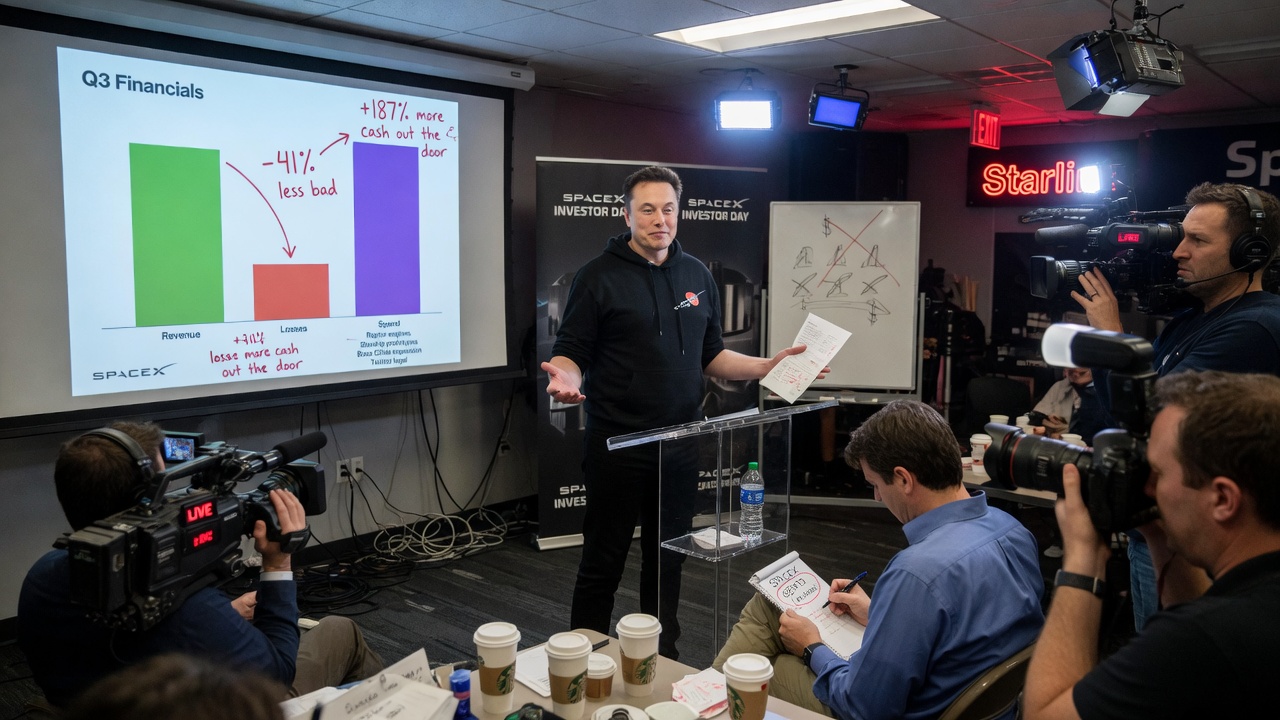
Ron Rugundy leaned into the camera Wednesday night with the grave sincerity of a man reporting a moon landing, because in a sense, he was. 'SpaceX posted revenue of $7.81 billion, crushing estimates,' Rugundy announced, 'while simultaneously spending more money on AI than several founding nations spend on, well, existing. Financial experts are calling this fiscal responsibility, SpaceX style. I'm calling it Tuesday.'
Wall Street's reaction was, appropriately, unstable — shares rocketed 9% before tumbling after-hours once investors noticed the words 'orbital data centers' in the earnings call and did the math on the Nvidia bill. Fictional analyst Trent Voller offered some clarity, or at least confidence. 'They're building AI data centers in space,' Voller said. 'That's either the single greatest infrastructure leap in human history, or the most elaborate tax-avoidance scheme ever launched on a rocket. Possibly both. I've stopped trying to separate them.'
Starlink, meanwhile, quietly did the unglamorous work of actually making money, crossing 12 million subscribers and narrowing the company's net loss, proving that beaming internet to rural cattle ranches remains more profitable than beaming servers into orbit. Rugundy closed the segment the way he closes most segments: unearned solemnity. 'Elon Musk's first earnings call as a public company went about as smoothly as one of his rocket landings,' he intoned. 'Which is to say, mostly — and occasionally not at all. I'm not going to sugarcoat this. I don't know how. I've never once landed anything successfully, rocket or otherwise.'