TECH GIANTS FOUND GUILTY OF PERFORMING EXACTLY AS ADVERTISED
Jury rules platforms liable for the addictive design they've spent 15 years selling to advertisers as a premium feature.
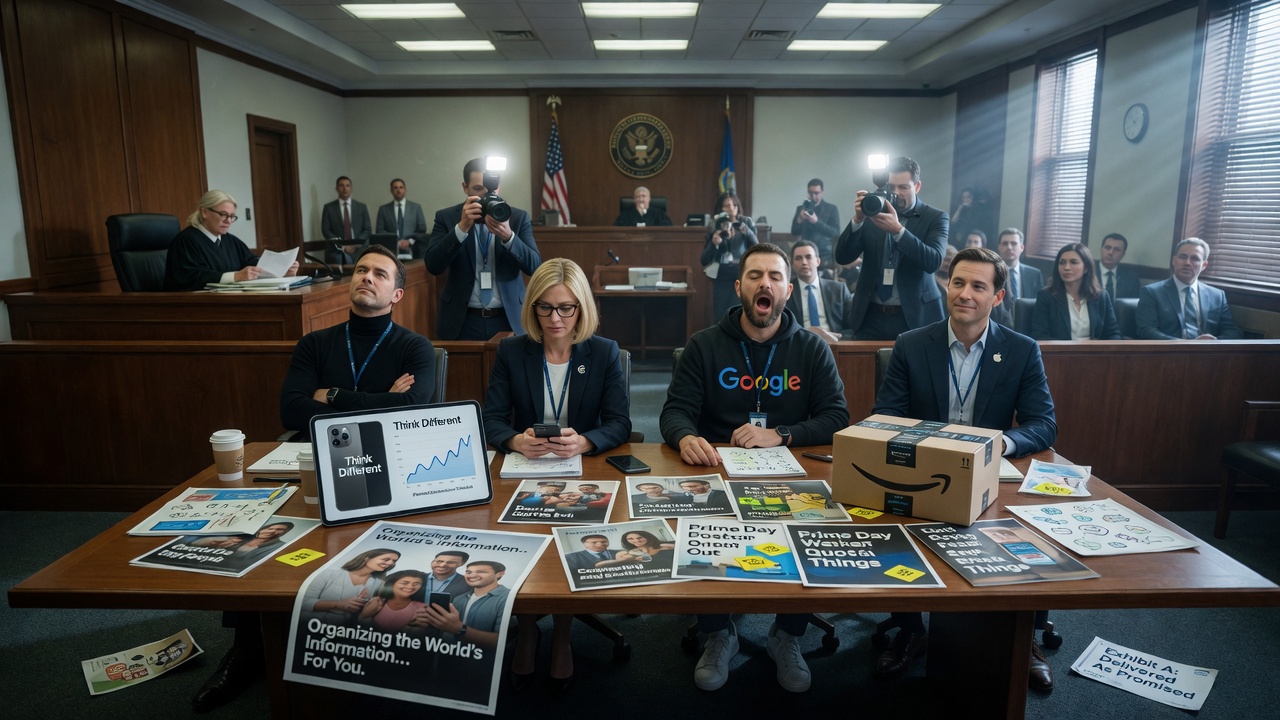
A jury has held Instagram and YouTube liable for fostering user addiction, in a verdict legal analysts describe as "the first time a company has been sued for false advertising by telling the truth to the wrong audience." Court exhibits reportedly included internal slide decks titled "Session Addiction Curves: Q3 Wins" filed directly beside public safety blog posts insisting no such curves exist, a juxtaposition one juror called "honestly the most honest thing about the whole industry."
"Damages should be paid in engagement metrics, since that's the only currency they price accurately," said plaintiffs' attorney Ron Fenster, adjusting a slide deck of his own. "For fifteen years these platforms told Madison Avenue, in writing, that they could keep a teenager's eyeballs glued to a screen better than anything since the invention of gravity. Now they want us to believe that was just marketing. Gentlemen, marketing is admissible." Fenster added his firm is already A/B testing sob-story ad copy for the sequel suits, with early data showing "my client's thumb developed a personality disorder" outperforming "my client missed a birthday party" by 34% among focus groups.
Platform spokespeople maintain the rulings reflect a fundamental misunderstanding of their products. "Our apps aren't designed to be addictive," said one representative, reading from a slide titled 'Addictive Design Roadmap 2025.' "They're designed to maximize meaningful time spent, which we distinguish from addiction using a proprietary algorithm that, coincidentally, also maximizes meaningful time spent." Industry insiders now expect a wave of copycat litigation, with several plaintiffs' firms reportedly testing push notifications that read "Someone just filed a lawsuit like yours — tap to see who's winning."